Battery Energy Storage Systems: The Missing Link in India’s Power Transition
 PRIYANKA
Battery Energy Storage Systems are emerging as the critical enabler of India’s renewable energy transition by solving the mismatch between power generation and demand. They help store excess solar and wind energy and supply it during peak hours, improving grid stability and reducing reliance on coal. With strong policy push and rising demand, BESS is set to become a core part of India’s power infrastructure.
India’s power sector is going through one of the biggest structural transformations in its history.
For years, the central discussion in energy was about generation. How much power can India produce? How quickly can coal capacity be added? How fast can solar and wind scale? Which source of power is cheaper?
That conversation is now changing.
India has already built significant renewable capacity and is targeting an even larger non-fossil fuel base by 2030. But as renewable penetration rises, the challenge is no longer just about generating electricity. The real challenge is about delivering reliable electricity at the right time, in the right quantity, without destabilizing the grid.
That is where Battery Energy Storage Systems, or BESS, become critical.
BESS is increasingly emerging as the part of the value chain that connects renewable generation with real-world demand. In simple terms, it is what makes intermittent energy usable. It is what helps the grid absorb cheap renewable power when available and release it when consumers actually need it.
In that sense, battery storage is not a side theme in the power sector anymore. It is becoming one of the most important building blocks of the next phase of India’s energy ecosystem. The uploaded note also highlights that India had less than 1 GWh of installed grid scale battery storage in 2025, while the long-term requirement and project pipeline are now rising sharply.
Why India Suddenly Needs Storage
India’s renewable energy capacity has grown rapidly, and the country is targeting 500 GW of non-fossil capacity by 2030. That ambition is significant because solar and wind are now among the cheapest sources of new power generation. However, renewable energy comes with a basic operational problem. It is not always available when consumption is highest.
Solar generation is concentrated during daylight hours. In many cases, it peaks around the middle of the day, when electricity demand may not be at its highest level. Wind generation is even more variable. It can depend on weather patterns, seasonality, and geography. Electricity demand, on the other hand, does not behave in the same way. Residential use often peaks in the evening. Commercial and industrial demand has its own pattern. Data centers, metro systems, EV charging corridors, and modern manufacturing require more reliable and round-the-clock supply.
This creates a mismatch between when electricity is generated and when electricity is required.
That mismatch leads to several structural problems:
- Midday renewable surplus
- During strong solar generation hours, the system can produce more renewable electricity than it can immediately consume. If the grid cannot absorb it, that energy is curtailed, which effectively means cheap power is wasted.
- Evening demand pressure
- Once solar generation drops after sunset, the grid must quickly meet rising evening demand using other resources, often coal or gas.
- Grid balancing challenges
- Large swings in solar or wind output can affect voltage and frequency, increasing the complexity of grid operations.
According to the uploaded material, India may require roughly 41 GW/208 GWh to 61 GW/230+ GWh of storage by 2030, depending on the scenario and source assumptions, in order to support the clean power build-out and maintain system stability.
So the issue is no longer whether renewable energy will grow. It already is. The issue is whether India can build the balancing infrastructure needed to make that renewable energy reliable. That is exactly the role BESS is designed to play.
What Exactly Is BESS
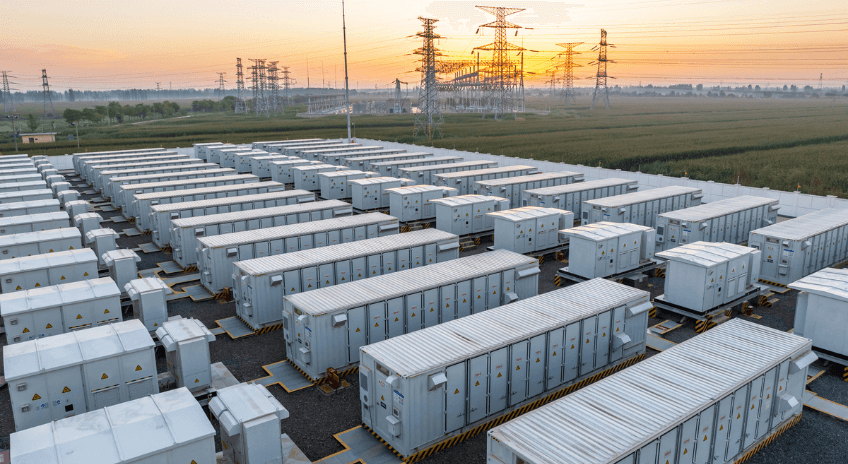
A Battery Energy Storage System is, at its core, a large rechargeable battery connected to the power system.
That may sound simple, but in practice, a utility-scale BESS installation is much more than just a battery pack. It typically includes:
- battery cells or modules
- battery racks or containers
- inverters and power conversion systems
- transformers
- thermal management and cooling systems
- energy management software
- monitoring and control systems
Its core operating logic is straightforward.
It does three things:
First, it charges.
It absorbs electricity when supply is abundant or cheap, such as during periods of excess solar generation.
Second, it stores.
The energy remains available for later use for minutes or hours, depending on the system design.
Third, it discharges.
It feeds electricity back into the grid when demand rises, when renewable output falls, or when the grid needs balancing support.
In practical terms, BESS can help with peak shaving, frequency regulation, renewable integration, backup support for critical infrastructure, and time shifting of electricity. The uploaded note explains that India’s early battery market was dominated by smaller backup applications, but the market is now moving sharply toward lithium-ion-based grid-scale and industrial storage systems.
Why BESS Is So Important in the Power System
To understand the real importance of BESS, it helps to think beyond the battery itself and focus on the problems it solves.
1. It turns renewable energy from cheap power into reliable power
Renewables have already won on the cost side in many cases. The problem is that low-cost generation is not enough. A power system does not just need cheap electricity. It needs electricity that arrives when needed.
Without storage, a solar-heavy system may generate surplus power during the day and still need coal support in the evening. With storage, that same midday electricity can be shifted to the evening peak.
That changes the value of renewable power completely. It makes renewables more dispatchable and more useful to discoms, utilities, and industrial consumers.
2. It improves grid stability
Traditional thermal plants take time to ramp up or ramp down. Battery storage can respond much faster, in many cases within seconds. That makes it highly valuable for grid frequency control, voltage support, and balancing rapid fluctuations in generation or demand.
As renewable penetration rises, this balancing capability becomes more important, not less.
3. It reduces renewable curtailment
If solar generation is high but immediate consumption is low, excess power may be wasted. BESS gives the system a way to absorb that energy and use it later. This improves overall renewable utilization and strengthens project economics.
4. It supports modern demand centers
India is not just adding more power demand. It is adding a different kind of power demand. Data centers require uninterrupted high-quality supply. EV fast charging networks can create sharp load spikes. Metro systems and industrial parks require reliable electricity. BESS can support these applications both at the grid level and behind the meter.
What the Power System Looks Like Without and With BESS
One of the clearest ways to understand the structural role of storage is to compare the system before and after BESS integration.
This comparison is important because it shows that storage is not just another infrastructure category. It changes the economics and operating logic of the grid itself.
Without BESS, renewable growth eventually starts hitting system-level limits. With BESS, renewable capacity can continue rising while the grid remains functional and stable.
India’s BESS Market Is Moving from Potential to Action
For many years, energy storage was discussed more as a future concept than a current industry. That has changed quickly.
The uploaded note indicates that cumulative installed stationary BESS in India was still under 1 GWh around 2025, but the project pipeline had already expanded sharply. It also mentions 92 to 102 GWh of projects and tenders in the pipeline, along with 69 new tenders issued in the past year alone, which shows that the market is entering a serious growth phase.
This is the typical pattern of an infrastructure sector before scale:
- first the need becomes visible
- then policy support begins
- then tenders emerge
- then project pipeline builds
- then private capital and ecosystem players follow
India appears to be entering the stage where storage is moving from policy concept to execution opportunity.
The note also states that the overall energy storage systems market in India could grow from around USD 3.7 billion in 2026 to over USD 21 billion by 2033, while the BESS segment itself could scale sharply over the coming decade.
Policy Support Is Playing a Big Role
No new infrastructure segment scales in India without policy alignment, and storage is no exception.
The uploaded material points to a few major policy and tender-side drivers:
- Viability Gap Funding for standalone BESS
- SECI tenders for storage and renewable plus storage combinations
- Energy Storage Obligation framework
- Support for domestic advanced cell manufacturing
These policy measures matter because battery storage still faces a high upfront cost barrier. Even if the long-term operating economics are strong, early-stage project viability often requires regulatory clarity and some degree of support.
This is particularly important because storage does not fit neatly into the old categories of the power market. It is not purely generation. It is not purely transmission. It is not purely consumption. It behaves as both a load and a source of supply depending on when it charges and discharges.
That means tariff structures, scheduling rules, grid charges, and contracting frameworks all need to evolve to properly value storage.
Where BESS Fits Across the Value Chain
Battery storage is not just one narrow product market. It creates opportunities across multiple layers of the power ecosystem.
The table below gives a good framework for understanding the opportunity buckets.
This is important from an investment perspective.
Many themes in infrastructure are often tracked only through one segment, such as utility ownership or project EPC. But storage has a broader value chain:
- upstream manufacturing
- midstream project execution
- downstream service models
- software optimization layers
That means BESS is not just a utility theme. It is also a manufacturing theme, a power electronics theme, a software theme, and potentially a capital goods theme.
BESS Versus Traditional Peaking Power
One useful comparison is between battery storage and traditional peaking solutions like coal or gas-based peaker plants.
This comparison shows why BESS is strategically attractive even if the economics are still evolving.
Traditional peakers may look easier to understand because tariff structures and fuel-based dispatch models already exist. But they come with fuel cost exposure, emissions, and slower response. BESS, by contrast, is capital-intensive upfront but far more responsive and cleaner in operation.
From a system perspective, storage can increasingly become the preferred balancing tool, especially where the goal is to maximize renewable integration rather than simply add another thermal support asset.
Why the Opportunity Is Bigger Than Just Utilities
A common mistake is to think battery storage is only relevant for state utilities or grid operators.
That is too narrow a view.
The opportunity is broadening because India’s future electricity demand is changing in character.
Data centers
Data centers need uninterrupted, high-quality power. Even small voltage or outage events can be expensive. As India builds more digital infrastructure, storage becomes relevant not only for backup but also for power optimization.
EV charging networks
Fast charging infrastructure creates local demand spikes. Battery storage can help smooth those spikes and reduce stress on the network.
Industrial and commercial users
Factories, commercial complexes, and industrial parks can use BESS to reduce peak demand charges, improve reliability, and increase renewable self-consumption.
Green hydrogen and new energy applications
As India explores green hydrogen and other emerging industries, storage can help manage variability and improve power quality for energy-intensive new applications.
This means BESS is moving into a position where it can benefit both utility-scale and behind-the-meter demand centers.
The Challenges Are Real
Even though the long-term case is strong, battery storage is not a frictionless opportunity. Several real challenges will shape the pace of scale-up.
1. High upfront capex
Battery systems require significant upfront investment. Even though variable cost is low because there is no fuel, the initial project cost can still be a major barrier.
2. Regulatory uncertainty
Because storage behaves like both a consumer and a supplier of electricity, it can face regulatory complications around grid charges, scheduling, and market design. If storage is incorrectly charged at multiple points in the chain, project returns can suffer.
3. Technology and degradation
Battery performance changes over time. Cycle life, degradation, thermal management, fire safety, and replacement economics all matter.
4. Import dependence and localization
If domestic cell manufacturing does not scale adequately, India risks replacing fossil import dependence with battery component import dependence. That is why PLI-linked manufacturing and ecosystem development are important.
5. Recycling and end-of-life management
Long-term sustainability will require a strong recycling ecosystem and clear pathways for battery second-life usage.
These are not reasons to dismiss the sector. They are the key variables that serious analysts and investors need to monitor.
Why This Theme Matters for Equity Research
From an equity research perspective, BESS is important because it is not just a product demand story. It is a structural ecosystem story.
When a theme like this scales, value can be created across several categories:
- battery manufacturers
- cell and pack assemblers
- inverter and power electronics players
- EPC companies
- renewable developers integrating storage
- software and control platform providers
- utilities and system-level operators
The second layer of analysis is even more important. A research analyst should not just ask whether BESS demand will grow. That part is becoming increasingly obvious. The deeper question is:
Where in the value chain will sustainable profitability emerge?
For example:
- Will manufacturing remain commoditized or become strategic with localization?
- Will utilities earn stable regulated returns from storage assets?
- Will renewable developers use storage to win higher-value dispatchable contracts?
- Will software and optimization layers command better margins than hardware?
That is where serious differentiation lies.
How BESS Fits into India’s 2030 Power Architecture
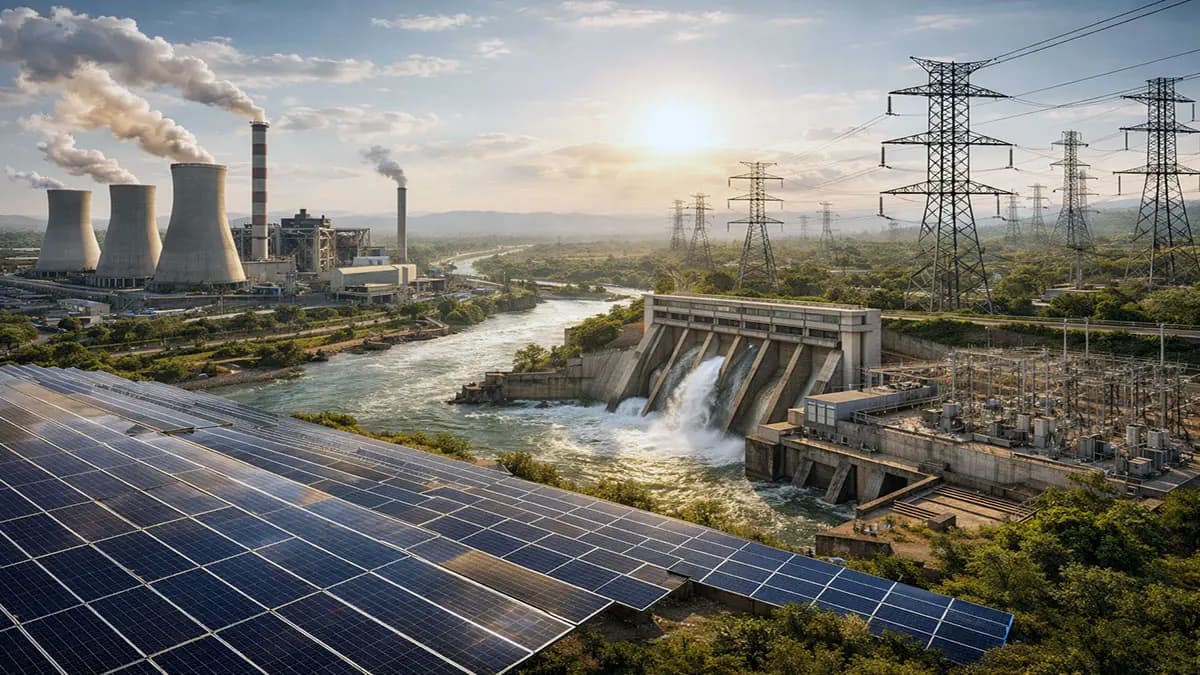
If India succeeds in building a 500 GW non-fossil system by 2030, the grid will look very different from today.
In that future system:
- Solar and wind will form a much larger share of capacity
- Thermal power may still remain relevant, but increasingly in a balancing and flexible role
- Pumped hydro and battery storage will become the balancing backbone
- Hybrid renewable projects with storage will become more common
- Critical power demand centers will increasingly integrate storage at different levels
The uploaded note indicates that one projection sees India’s cumulative battery storage capacity potentially reaching around 346 GWh by 2033, which gives a sense of how fast the sector could scale from its currently low base.
That kind of change would mean storage is no longer treated as an ancillary addition. It would become core infrastructure, much like substations, transmission lines, and grid automation systems are viewed today.
Final Perspective
India’s power transition is often described as a generational story.
That is only partly true.
Generation creates electricity. But it does not solve the full problem. Electricity also has to be shifted, balanced, stabilized, and delivered in a usable form. As renewable penetration rises, that balancing function becomes one of the most important parts of the system.
That is why Battery Energy Storage Systems matter so much.
They help reduce curtailment. They make renewable power dispatchable. They support grid stability. They reduce dependence on thermal peaking support. They serve the needs of new-age electricity consumers. And they create an entirely new investment and industrial value chain in the process.
So if the first phase of India’s clean energy transition was about adding renewable capacity, the next phase may well be about building the infrastructure that makes those renewables truly dependable.
And in that future, BESS is not just another segment.
It is the missing link that makes the entire power transition work.
_1783769780040.png&w=3840&q=75)
_1783766890311.png&w=3840&q=75)
_1782728608439.png&w=3840&q=75)






_1768996873080.png&w=3840&q=75)



_1755606872650.png&w=3840&q=75)