The Hidden Value Chain Behind India’s Data Center Boom.
 PRIYANKA
India’s data center boom is not just about buildings and operators. The real opportunity sits underneath, in transformers, gensets, batteries, cooling systems, cables, fiber, and AI compute. This article breaks down the hidden listed value chain powering India’s next digital infrastructure cycle.
The Hidden Value Chain Behind India’s Data Center Boom
Every time someone asks ChatGPT a question, watches a Netflix show, pays through UPI, stores photos on the cloud, or runs an AI model, something physical happens somewhere.
A server wakes up.
Electricity flows through cables.
Transformers handle the load.
Cooling systems fight the heat.
Backup generators wait silently in case the grid fails.
Fiber cables move data at near-light speed.
And inside a secured building, thousands of machines work without pause.
That building is called a data center.
But calling it a “building” is like calling an airport a waiting hall.
A modern data center is not just real estate. It is a high-density power, cooling, telecom, and compute factory.
And now, because of AI, this factory is becoming far more complex.
Earlier, data centers were mostly built for cloud storage, enterprise software, banking systems, apps, videos and websites. These workloads were heavy, but manageable.
AI changes the game.
When companies train or run large AI models, they need GPU clusters. These are not normal servers. They consume more power, generate more heat, and need much faster connectivity. So an AI data center needs more electrical equipment, more cooling intensity, more fiber, more backup power, and more specialized compute infrastructure per MW.
That is where the real story begins.
Most people look at data center operators and stop there.
But the smarter way to understand this theme is to go below the operator.
Because every MW of data center capacity creates demand across a long chain of listed Indian companies: transformers, switchgear, cables, gensets, batteries, cooling systems, optical fiber, servers, and GPU cloud.
So let’s walk inside a data center value chain, layer by layer.
First, what exactly does a data center do?
Imagine a company like a bank, a stock exchange, an OTT platform, an AI startup or a cloud provider.
They all need computing power. They need servers to store data, run applications, and process millions of digital requests.
Now they have two choices.
They can build their own data center, which is expensive, complex and operationally risky.
Or they can lease capacity from a professional data center operator.
That operator provides land, building, power, cooling, security, connectivity, and uptime.
The customer brings its servers, or uses cloud infrastructure hosted inside that facility.
This is the basic model.
But the important thing is this: a data center does not sell “space” in the traditional real estate sense.
It sells reliable IT load.
That means the real asset is not just square feet. The real asset is power capacity, cooling capacity, uptime, and connectivity.
That is why MW matters so much in this industry.
When a company says it has 100 MW of data center capacity, it is not talking about the size of the building. It is talking about how much IT equipment load the facility can support.
And that is why AI is so important.
AI makes every MW more equipment-heavy.
A normal enterprise server rack may consume a few kilowatts. But AI GPU racks can consume far more. As rack density rises, the entire data center design has to change.
More power has to enter the building.
More transformers are needed.
More switchgear is needed.
More cables are needed.
More UPS and battery backup is needed.
More generators are needed.
More advanced cooling is needed.
More optical fiber is needed.
More specialized servers are needed.
So the data center boom is not just about who owns the building.
It is about who supplies the nervous system, lungs, blood vessels, and brain of the building.
Layer 1: The visible layer, data center operators
The first layer is the most obvious one.
These are the companies that own, build, or operate the data center.
In India, this layer includes names like Anant Raj, Bharti Airtel through Nxtra, Reliance Industries through Jio, Adani Enterprises through AdaniConneX, Techno Electric and Tata Communications.
Anant Raj is an interesting example because it started as a real estate company. But instead of only selling or leasing property, it is trying to convert its land bank into digital infrastructure. The logic is simple. If a company already owns land in strategic locations, and if it can bring in power, cooling and cloud customers, the same land can become a much higher-value asset.
That is why Anant Raj’s data center and cloud business is being watched closely. It already has operating capacity and has spoken about aggressive expansion plans over the next few years. But this is also where investors need discipline. In data centers, announced capacity is not the same as commissioned capacity. And commissioned capacity is not the same as revenue-generating occupied capacity.
Bharti Airtel’s Nxtra is a different type of play. Airtel already has enterprise relationships, telecom infrastructure, fiber connectivity, and network assets. So Nxtra is not just a building owner. It is part of a larger digital infrastructure ecosystem.
Reliance has another advantage: scale. Jio already sits at the center of India’s digital consumption ecosystem. If Reliance builds AI-ready data centers, it can connect telecom, cloud, consumer data, enterprise services and energy infrastructure.
AdaniConneX is also important because data centers require exactly the things Adani is strong at: land, power, transmission, infrastructure execution and renewable energy. A hyperscale data center is not a small office building. It is a large infrastructure project. That fits the DNA of large infrastructure groups.
Then there is Techno Electric. It is not just approaching the opportunity as a real estate player. It comes from the power infrastructure side. That matters because the most difficult part of a data center is not the glass facade. It is electrical reliability.
This is the first lesson.
The data center operator may get the headline.
But the operator cannot function without the deeper layers.
Layer 2: Power infrastructure, the real bottleneck
If a mall loses power for five minutes, people complain.
If a data center loses power for five minutes, customers can lose money, systems can fail and contracts can get damaged.
That is why power infrastructure is the heart of the data center.
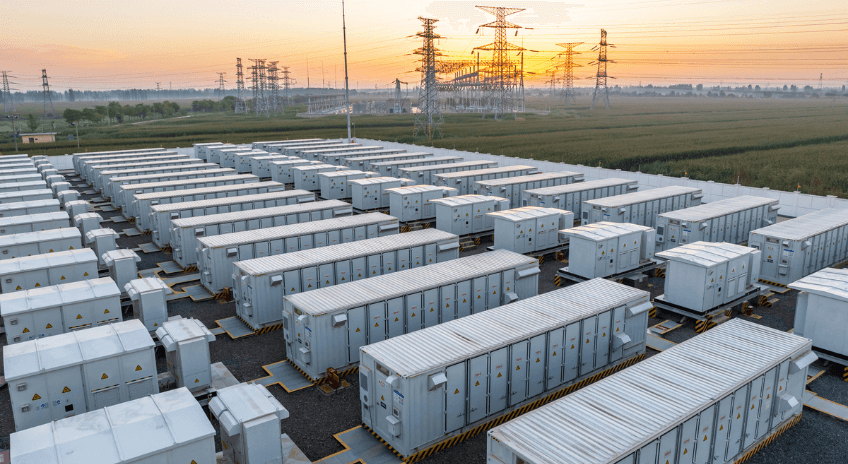
Electricity has to come from the grid. Then it has to pass through substations, transformers, switchgear, protection systems, power distribution units and backup architecture before it reaches the servers.
This is where companies like Hitachi Energy India, CG Power, GE Vernova T&D India, Siemens India, ABB India and Schneider Electric Infrastructure become important.
Hitachi Energy India supplies equipment and systems used in transmission, grid automation, transformers and high-voltage infrastructure. In a data center context, its role is to make sure large power loads can be safely and reliably connected.
CG Power is another important player with transformers, switchgear and industrial electrical products. The company benefits not only from data centers, but also from broader power transmission, renewable energy, industrial capex and electrification.
GE Vernova T&D India, Siemens India and ABB India also sit in this high-value electrical infrastructure pool. They are not pure data center companies. But they supply the kind of systems that large, power-hungry infrastructure assets need.
Schneider Electric Infrastructure is also relevant because the Schneider ecosystem globally is deeply involved in data center power management, UPS, switchgear, cooling and energy management. The listed Indian entity participates in electrical distribution equipment like transformers and switchgear.
Now here is the important point.
Power infrastructure companies may not look as exciting as AI cloud companies.
But in many cases, they may sit closer to the bottleneck.
Because without reliable power, there is no AI data center.
A GPU is useless if the electrical backbone cannot support it.
Layer 3: Backup power, the insurance policy nobody can avoid
A data center cannot simply trust the grid and relax.
It needs backup.
The usual design has multiple layers. Grid power is the first source. UPS and batteries provide immediate backup if there is a disruption. Diesel or gas generators then take over if the outage lasts longer.
This is where Cummins India, Kirloskar Oil Engines, Amara Raja Energy & Mobility and Exide Industries enter the story.
Cummins India is one of the strongest listed generator players. Its power generation business is directly relevant because large data centers need high-capacity backup power. For every MW of IT load, operators often need significant standby capacity to maintain uptime.
Kirloskar Oil Engines, through KOEL Green, also supplies gensets and power backup systems. It may not always get the same market attention as Cummins, but it is part of the same backup-power layer.
Then come batteries.
Amara Raja and Exide are not data center operators. But their industrial battery businesses become important because UPS systems need batteries to bridge power interruptions. In a mission-critical facility, even a few seconds of power gap is unacceptable.
Think of this layer like an airbag in a car.
You do not use it every day.
But when something goes wrong, it decides whether the system survives.
That is why backup power is not optional in data centers. It is built into the business model.
Layer 4: Cables, the invisible network inside the building
Cables are not glamorous.
Nobody looks at a cable and says, “This is the future of AI.”
But without cables, the entire future of AI stops.
A data center needs many types of cables.
Power cables bring electricity into the facility.
EHV and HT cables handle large electrical loads.
Control cables connect systems.
Building wires run internal circuits.
Fire-safe cables protect mission-critical areas.
Optical fiber carries data.
Inside one large data center campus, the cable intensity can be massive.
This is where companies like Polycab India, KEI Industries, RR Kabel, Apar Industries, Finolex Cables and Universal Cables become relevant.
Polycab is India’s largest wires and cables company. For data centers, its role is simple: electrical cabling is required everywhere. From the substation to the server hall, from power rooms to cooling systems, cables are part of the backbone.
KEI Industries is strong in EHV, HT and LT cables. This makes it relevant for large infrastructure and power distribution requirements. Data centers are one more high-growth end market in a broader capex cycle.
Apar Industries has exposure to conductors and specialty cables. RR Kabel and Finolex Cables provide broader cable and wire exposure.
The key thing to understand is this: data center cable demand is not only about quantity. It is also about reliability, safety, and performance.
A low-quality cable failure inside a mission-critical facility is not a small issue. It can create downtime, fire risk, and reputational damage.
So as data centers become larger and denser, the demand shifts toward higher-quality products.
That is where organized listed players can benefit.
Layer 5: Cooling, the layer AI is changing the most
Now imagine thousands of servers running day and night.
They consume electricity.
Electricity turns into heat.
And if that heat is not removed, the machines slow down, fail or shut off.
That is why cooling is one of the most important parts of a data center.
In traditional data centers, air cooling was enough for many workloads. Chillers, precision air conditioning systems, and airflow management handled the job.
But AI is making this harder.
GPU clusters generate far more heat. Rack densities are rising. In some cases, air cooling is no longer enough. That is why the industry is moving toward liquid cooling.
This creates two types of opportunities.
The first is conventional precision cooling: chillers, HVAC systems, cooling towers, air handling units and facility-level thermal management.
The second is liquid cooling: coolant distribution, manifolds, hoses, skid assemblies, heat exchangers and secondary fluid networks.
Blue Star and Voltas are important names in the first bucket.
Blue Star provides chillers, precision cooling and electro-mechanical solutions. It can participate in data center cooling through project execution, HVAC systems and specialized cooling products.
Voltas also participates through HVAC, chillers and electro-mechanical projects. For data centers, cooling is not regular air conditioning. It has to be reliable, controlled and efficient.
Then comes Aeroflex Industries, which is interesting for a different reason.
Aeroflex is not a normal HVAC company. It manufactures flexible flow solutions like stainless steel hoses, assemblies, bellows, and related products. Its entry into liquid cooling skid assemblies for AI data centers is important because liquid cooling needs controlled movement of coolant through complex systems.
If AI racks become denser, this layer becomes mission-critical.
Other relevant names include KRN Heat Exchanger, which makes heat exchangers and cooling components, Thermax, which has energy and utility solutions, and Amber Enterprises, which has exposure to the broader cooling component ecosystem.
Cooling is where the old data center and the AI data center start to look very different.
In a normal data center, cooling is important.
In an AI data center, cooling becomes a competitive advantage.
Layer 6: Connectivity, because data also needs highways
A data center is not useful if it cannot move data quickly.
Inside the building, servers need to talk to other servers.
Between buildings, data centers need to connect with each other.
Across cities and countries, cloud networks need high-speed fiber routes.
This is why optical fiber and connectivity companies matter.
Sterlite Technologies, HFCL, Tejas Networks, Tata Communications, Bharti Airtel and RailTel are relevant here.
Sterlite Technologies is one of the more direct optical fiber and data center connectivity names. AI data centers need high-density fiber because data movement between servers and racks is intense. STL has been building products for enterprise and data center customers, including high-density cabling solutions for AI-led data halls.
HFCL is another optical fiber and telecom equipment player. It participates in fiber, network products and telecom infrastructure.
Tejas Networks is more of an optical networking and telecom equipment company. It benefits from the need for stronger network infrastructure as data traffic grows.
Tata Communications and Bharti Airtel are also important because they provide enterprise connectivity, cloud connectivity and telecom backbone services. In the data center business, location matters, but connectivity matters just as much.
A data center without strong fiber is like a five-star hotel with no road leading to it.
The building may be excellent.
But nobody can use it properly.
Layer 7: Compute, where AI actually happens
So far, we have built the shell.
Land is ready.
Power is available.
Cables are installed.
Cooling is running.
Fiber is connected.
Now comes the brain: compute.
This is where servers, GPUs, high-performance computing systems, and AI cloud platforms enter the picture.
In India, the key listed names are Netweb Technologies and E2E Networks. Large companies like Tata Communications and L&T also participate in parts of this ecosystem.
Netweb Technologies is one of India’s most direct listed AI infrastructure hardware companies. It manufactures high-performance computing systems, AI servers, private cloud systems and GPU-accelerated platforms.
This is not generic IT hardware. AI infrastructure requires specialized design, integration and deployment. Netweb’s large sovereign AI order based on NVIDIA Blackwell architecture shows how Indian companies can participate in the AI compute stack.
E2E Networks is different. It is not only selling hardware. It offers GPU cloud infrastructure. That means customers can rent AI compute instead of buying GPUs themselves.
This is important because GPUs are expensive. Not every startup, research lab, or enterprise wants to buy and maintain its own AI infrastructure. A GPU cloud platform allows them to access compute on demand.
E2E’s work with NVIDIA Blackwell GPU clusters and IndiaAI-linked infrastructure puts it directly in the AI cloud conversation.
L&T also becomes relevant because AI data centers require serious engineering execution. Its Chennai AI-ready data center and collaboration around GPU clusters show that traditional infrastructure companies can also move into digital infrastructure.
This is the top layer of the value chain.
But it only works because all the lower layers exist.
A GPU cluster is powerful.
But without power, cooling, and connectivity, it is just expensive metal.
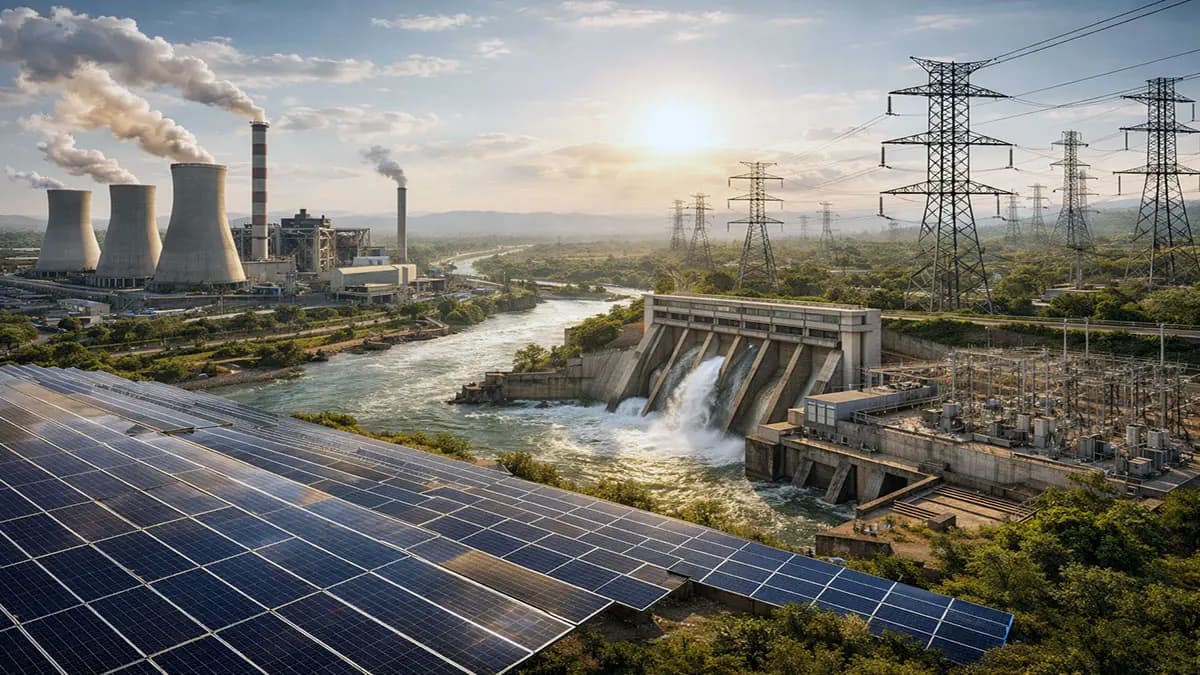
Layer 8: Renewable power and grid support
There is one more layer that cannot be ignored.
Data centers consume huge amounts of electricity.
As India builds more data centers, the pressure on power supply will increase. At the same time, global customers want lower-carbon infrastructure. Cloud companies and AI companies do not want their digital growth to look environmentally irresponsible.
This creates demand for renewable power, open-access power, grid upgrades and energy storage.
Tata Power, NTPC, Adani Green Energy, JSW Energy and Power Grid Corporation become relevant here.
Tata Power and JSW Energy can participate through renewable and power supply solutions.
NTPC is relevant because India’s base power demand is rising, and large-scale power generation remains essential.
Adani Green becomes relevant because renewable power can be linked with large digital infrastructure projects.
Power Grid Corporation is important because no data center boom can happen without transmission infrastructure.
This is the part most people ignore.
Data centers are digital assets.
But they are built on physical electricity.
And electricity needs generation, transmission, storage, and reliability.
So where is the real opportunity?
The lazy answer is: buy anything connected to data centers.
That is wrong.
The smarter answer is: understand where each company sits in the value chain and how direct the exposure is.
There are three types of companies in this theme.
The first group is direct data center and AI infrastructure plays. This includes names like Anant Raj, Techno Electric, Netweb Technologies, E2E Networks, Aeroflex Industries and Sterlite Technologies. These companies have clearer linkage to the data center or AI infrastructure opportunity.
But direct exposure also comes with higher expectation risk. If valuations already assume aggressive growth, even a small execution delay can hurt.
The second group is critical equipment suppliers. This includes Hitachi Energy India, CG Power, Cummins India, Polycab, KEI Industries, Blue Star, ABB India, Siemens India, and Schneider Electric Infrastructure.
These companies may not be pure data center plays. But they supply essential equipment. In some cases, they are closer to the bottleneck than the operators themselves.
The third group is indirect beneficiaries. This includes companies like Tata Power, NTPC, Power Grid, RailTel, Tejas Networks, Exide Industries, and Tata Communications.
These companies may benefit from the ecosystem, but data centers may not be large enough to change the full company story immediately.
That distinction matters.
Not every company mentioned in a data center article deserves a data center valuation multiple.
The investor’s real checklist
Before getting excited about any data center stock, ask five questions.
First, how much revenue actually comes from data centers today?
Second, is the company selling a critical product or a generic product?
Third, is demand visible through order book, capacity expansion, or customer wins?
Fourth, does the company have pricing power or will competition eat the margins?
Fifth, is the stock already priced as if the future has arrived?
This is where discipline matters.
A company can be in a great theme and still be a bad investment at the wrong price.
A company can have a small data center exposure and still be marketed as an AI play.
And a company can have strong order wins but weak execution.
So the value chain is only the starting point.
The real work is financial analysis: revenue exposure, margins, return on capital, order book quality, balance sheet strength, capex intensity and valuation.
The big picture
India’s data center story is moving from niche to mainstream.
The drivers are powerful: cloud adoption, 5G, digital payments, video consumption, data localization, enterprise digitization, AI workloads and sovereign compute infrastructure.
But the most important point is this:
India’s data center boom is not just an operator story.
It is a full infrastructure story.
The operator may own the building.
But Hitachi Energy, CG Power and Schneider help power it.
Cummins and KOEL help back it up.
Amara Raja and Exide help bridge outages.
Polycab and KEI help wire it.
Blue Star, Voltas and Aeroflex help cool it.
STL and HFCL help connect it.
Netweb and E2E help bring AI compute to life.
Tata Power, NTPC and Power Grid help feed the entire system.
That is the real value chain.
For years, Digital India was seen as an app story.
UPI was an app story.
Food delivery was an app story.
E-commerce was an app story.
OTT was an app story.
But the next phase will be different.
The next phase of Digital India will need factories of compute.
And those factories will need power, cooling, cables, fiber, batteries, generators and servers.
In simple words, India’s digital economy is becoming physical.
The internet may feel invisible.
AI may feel like magic.
But behind every prompt, every model and every cloud workload, there is a hard infrastructure machine running quietly in the background.
That machine is the data center.
And the companies that build, power, cool, connect, and equip that machine may become some of the most important beneficiaries of India’s next digital infrastructure cycle.
Not because they are fashionable.
But because without them, the AI story cannot even switch on.
_1783769780040.png&w=3840&q=75)
_1783766890311.png&w=3840&q=75)
_1782728608439.png&w=3840&q=75)





_1768996873080.png&w=3840&q=75)



_1755606872650.png&w=3840&q=75)